

Fermented
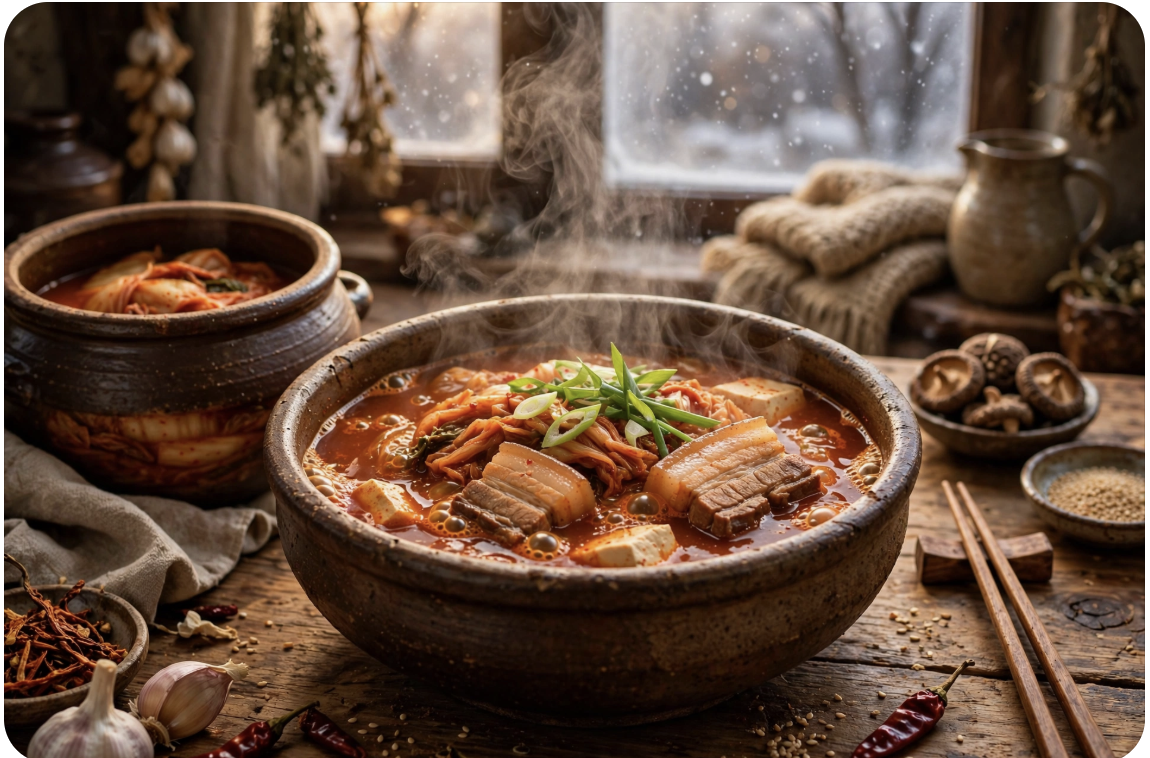
Korean Kimchi Stew (Kimchi Jjigae)
A fiery, deeply flavorful stew built on well-fermented kimchi.
One hundred gentle recipes inspired by Asian culinary traditions, seasonal rhythms, and the simple pleasure of preparing a meal with attention.
There is no promise here of perfection, detox, or instant transformation. Only warm bowls, fragrant herbs, patient simmering, and recipes that invite you to return to your own rhythm. Adapt every recipe to your taste, season, culture, and dietary needs.
Each recipe is an invitation rather than a rule. Notice the aroma as it changes, leave room for your own knowledge, and enjoy the quiet work of making a meal. Traditional associations are cultural context, not medical advice.
Beyond the recipes, explore the foundations of Asian wellness and mindful cooking.
Align your meals with the 24 solar terms.
Discover the properties of 100 traditional ingredients.
Learn the rituals of preparation and presence.
From miso to kombucha, master living foods.
Discover the cultural origins, seasonal associations, and culinary uses of 100 traditional Asian ingredients, herbs, and roots.
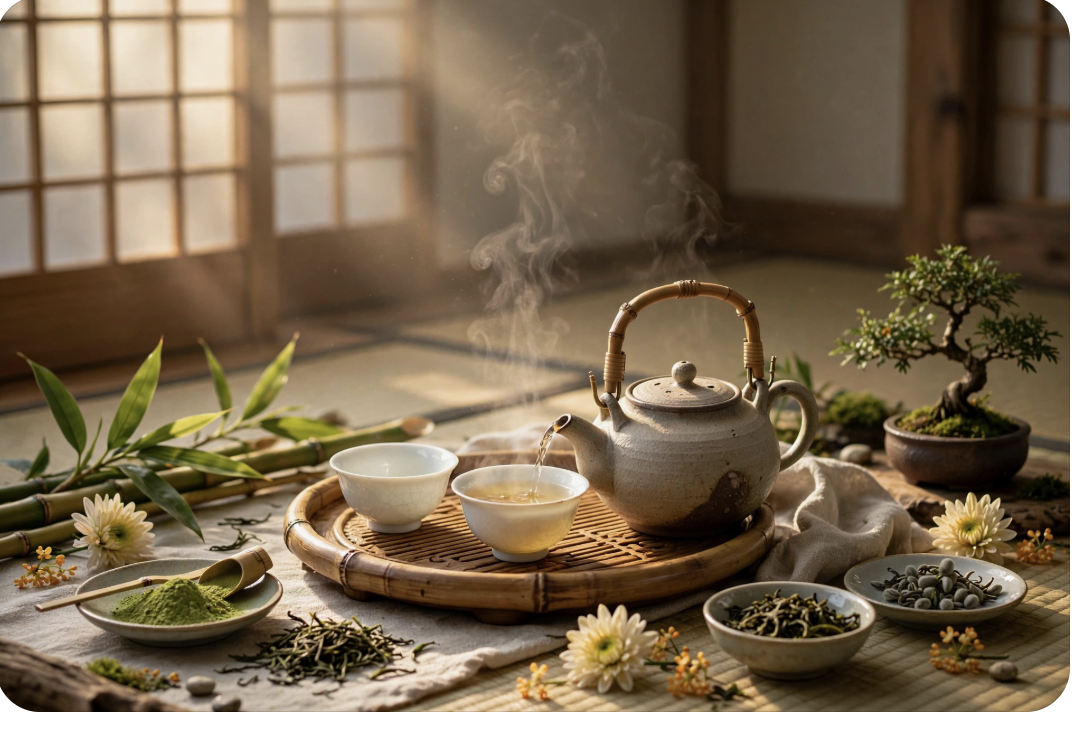
Learn the rituals, traditions, and mindful art of preparing tea across Asia.
Tea is a tradition that invites patience, presence, and appreciation. Across Asia, tea ceremonies celebrate craftsmanship, hospitality, and the changing seasons through simple, intentional rituals. This guide explores the philosophies and practical techniques to bring mindful tea preparation into your daily life.
Three distinct paths to the same destination: a quiet mind and a warm cup.
The Way of Tea. A choreographed ritual of preparing and serving matcha (powdered green tea). It emphasizes aesthetics, hospitality, and the four principles of tea.
The "art of tea." A meticulous preparation method using small clay teapots and multiple short infusions. It focuses on appreciating the aroma, flavor, and evolution of the tea leaves.
The "etiquette of tea." A tradition that values naturalness and simplicity. It focuses on the quiet elegance of serving tea to guests as an act of hospitality and respect.
Whether for a formal ceremony or a quiet morning, these steps guide the mindful preparation of tea.
Rinse the teapot and cups with hot water. This cleanses the vessels and prepares them to hold the warmth of the tea.
Use a bamboo scoop to measure the tea leaves. Appreciate their shape, color, and aroma before placing them in the pot.
Bring water to the precise temperature required for your tea type. Avoid boiling water for delicate green or white teas.
Pour water over the leaves gently. Steep for the recommended time, watching the leaves unfurl and the color develop.
Pour the tea into a pitcher (Cha Hai) to ensure even flavor, then distribute into cups. Pour from a height to aerate.
Hold the cup with both hands. Notice the aroma, the warmth, and the flavor. Sip slowly and be present.
Different teas require different temperatures to release their best flavors without bitterness.
Cultural and culinary facts about the way of tea.
Boiling water can burn delicate green tea leaves, turning them bitter. Lower temperatures extract sweeter, more complex umami flavors.
Yixing clay teapots are unglazed and porous. Over time, they absorb the tea's oils, developing a patina that enhances future brews.
High-quality loose-leaf teas can be steeped multiple times. Each infusion reveals a different layer of flavor and aroma.
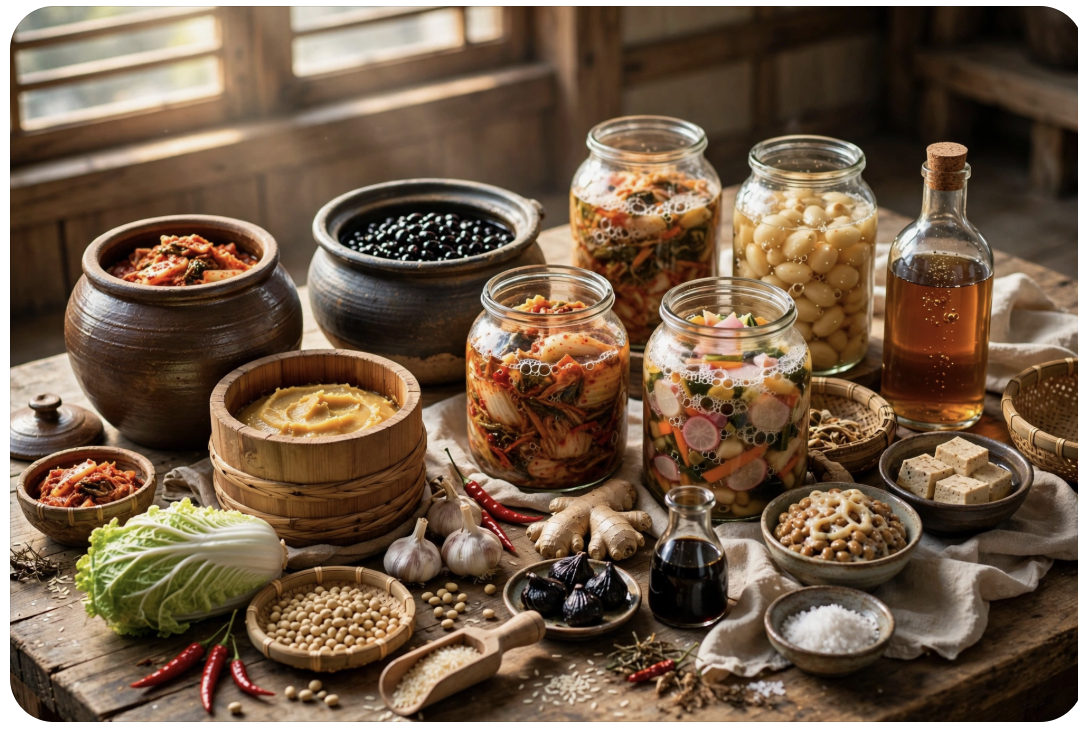
Discover the traditions, techniques, and flavors of living foods—from miso and kimchi to kombucha and koji.
For thousands of years, fermentation has transformed simple ingredients into deeply flavorful foods enjoyed across Asia. Through patience, craftsmanship, and time, these traditional techniques create complex tastes and preserve culinary heritage.
Every culture has its own relationship with living foods.
Deeply rooted in seasoning bases and preservation.
Focus on craftsmanship, umami, and precision.
Seasonal preparation and family traditions.
A universal culinary language of preservation.
The fundamental steps to transform fresh ingredients into living foods.
Choose high-quality, fresh ingredients.
Prepare with salt or a starter culture.
Store in the proper container (crock or jar).
Allow time to ferment in a cool, dark place.
Taste and monitor the flavor development.
Store in the fridge to slow fermentation.
A guide to the most iconic living foods.

A Japanese paste made from fermented soybeans and koji. Deeply umami and savory.

Korean fermented cabbage with chili, garlic, and ginger. Tangy and spicy.

A liquid condiment made from fermented soybeans, wheat, and salt.

Fermented sweet tea using a SCOBY. Effervescent and tart.

Aged garlic that turns black, developing a sweet, molasses-like flavor.

Vegetables preserved in vinegar or salt brine. Crisp and tangy.
Time is the most crucial ingredient in fermentation.
Tap a flavor to discover fermented foods that showcase it.
Umami flavors are found in Miso, Soy Sauce, Doenjang, and Natto.
Explore dishes from our library that highlight these living foods.
A fiery, deeply flavorful stew built on well-fermented kimchi.
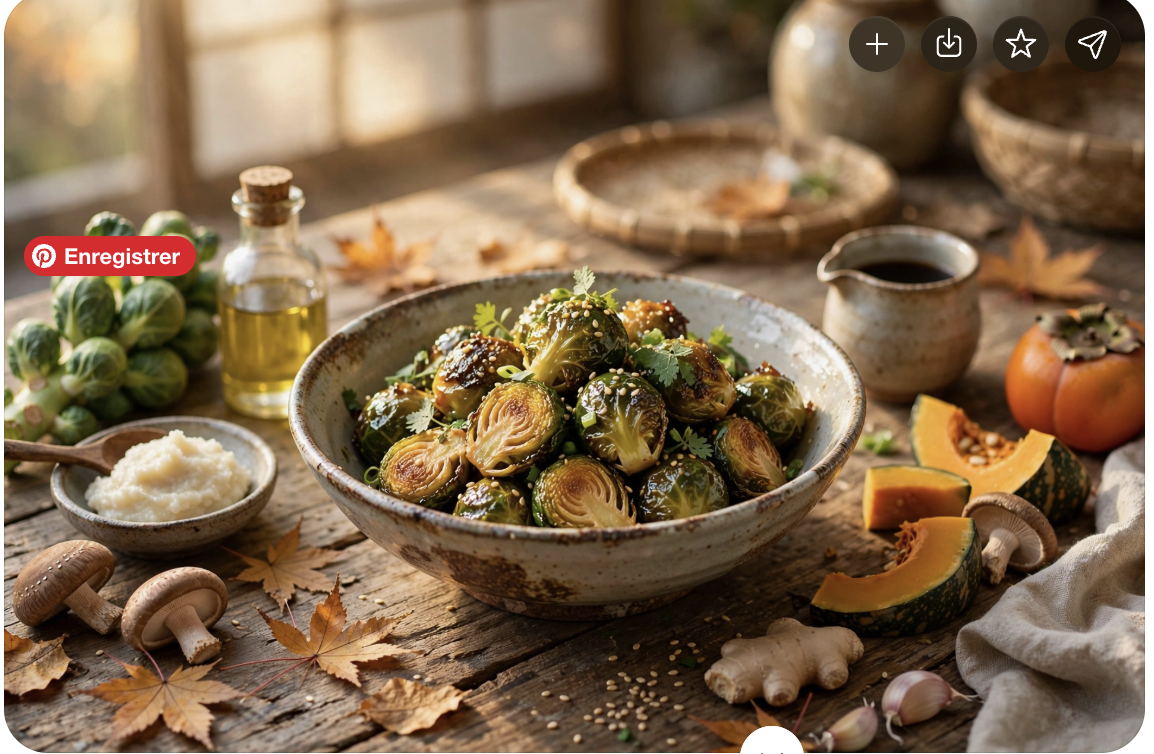
Crispy roasted Brussels sprouts tossed in a savory miso dressing.
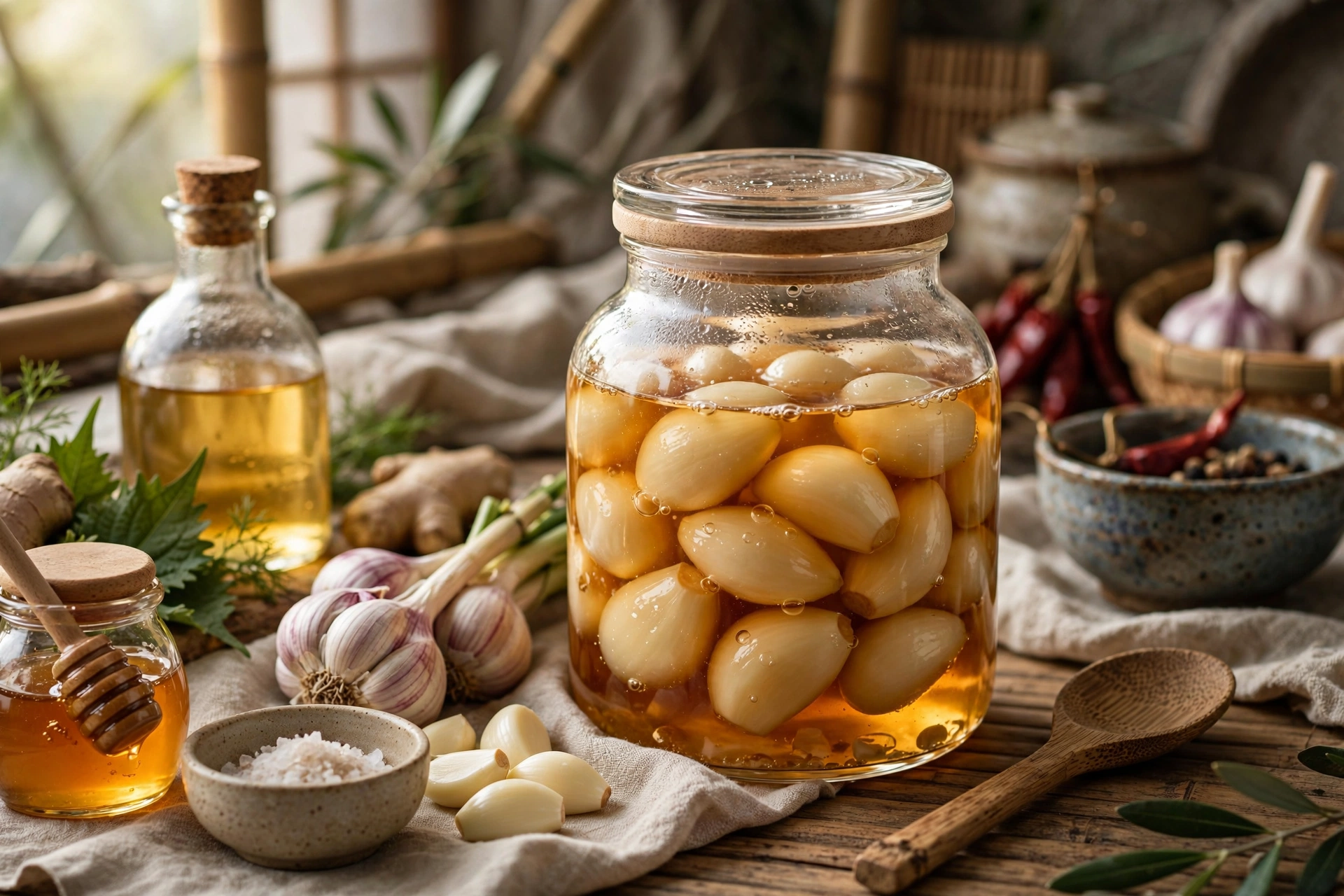
A fermented garlic remedy that mellows in flavor over time.
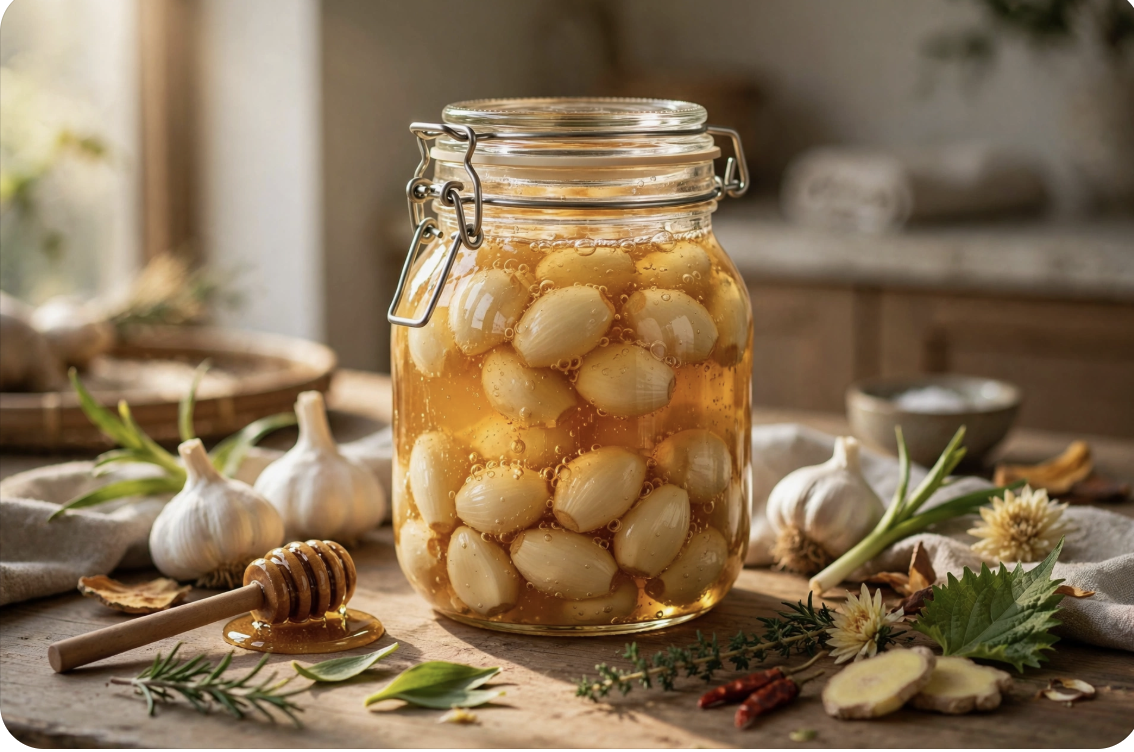
A simple, powerful remedy of raw garlic fermented in honey.
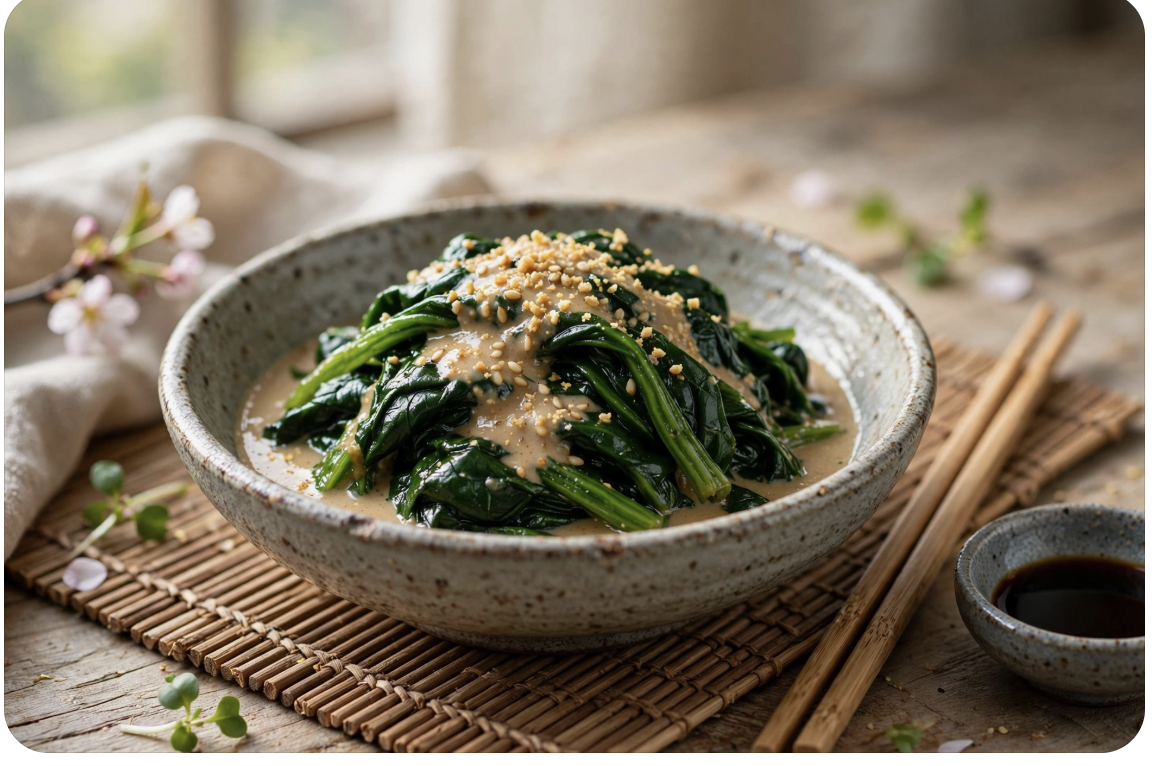
Blanched spinach gently coated in a sweet, toasted sesame dressing.
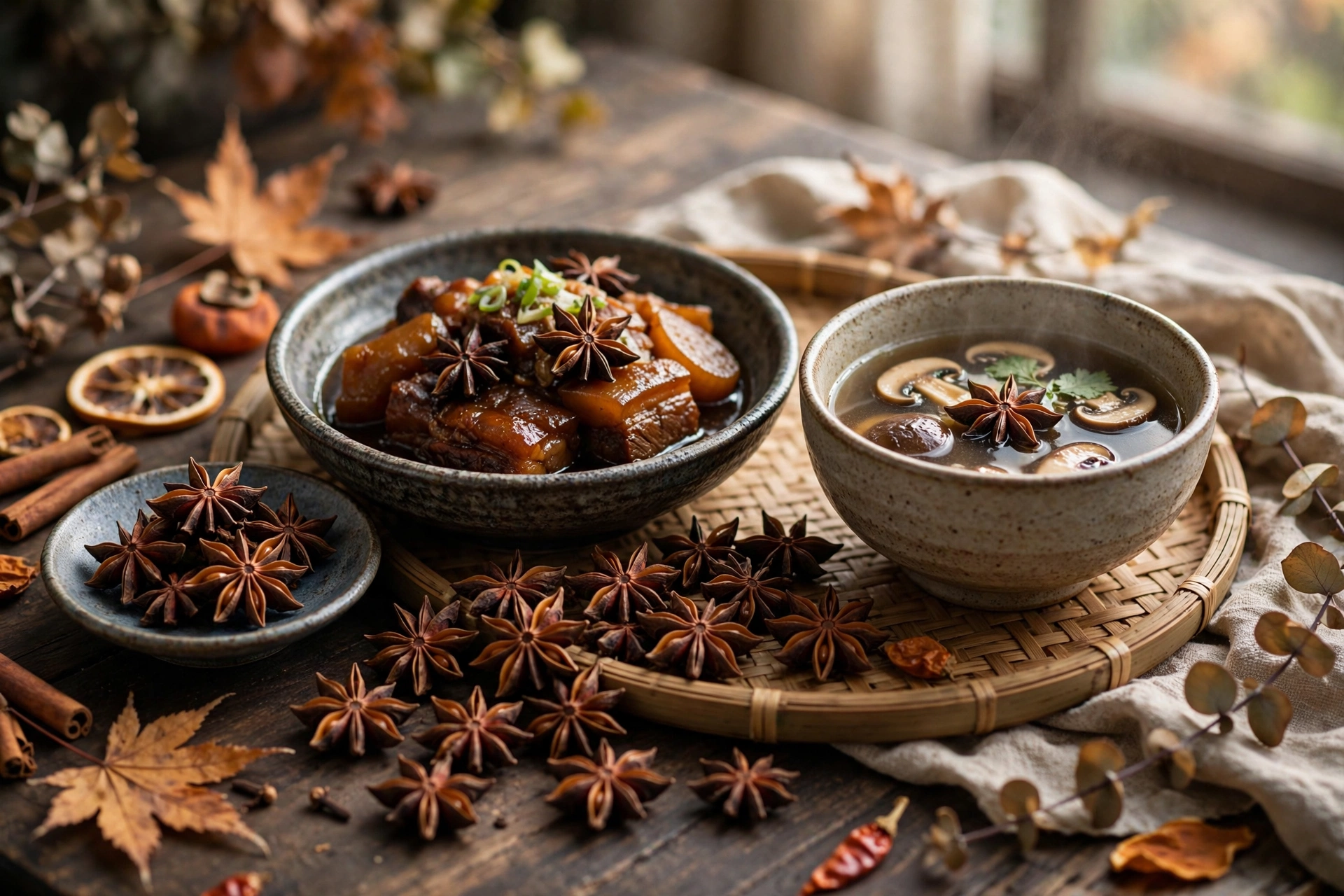
A rich, dark, slow-braised pork belly dish that melts in the mouth.
Culinary history and food traditions of fermentation.
Fermentation has been used for thousands of years to preserve seasonal harvests, ensuring food was available during harsh winters or long journeys.
Koji (Aspergillus oryzae) is a mold cultivated on rice or barley. It is the essential starter for miso, soy sauce, and sake, breaking down starches into sugars.
Traditional Korean Onggi jars are porous, allowing gases to escape while keeping the interior cool, creating the perfect environment for kimchi to ferment.
Pickling uses vinegar (acid) for quick preservation, while fermentation uses salt and time to encourage beneficial bacteria to create lactic acid.
Fermentation creates complex, layered flavors that cannot be achieved by cooking alone. Enzymes break down proteins into savory amino acids (umami).
Fermented foods are alive. Refrigeration slows down the process, but the bacteria continue to work, changing the flavor over time.
Inspired by Asian culinary and wellness traditions. Not intended to diagnose, treat, or prevent any health condition.