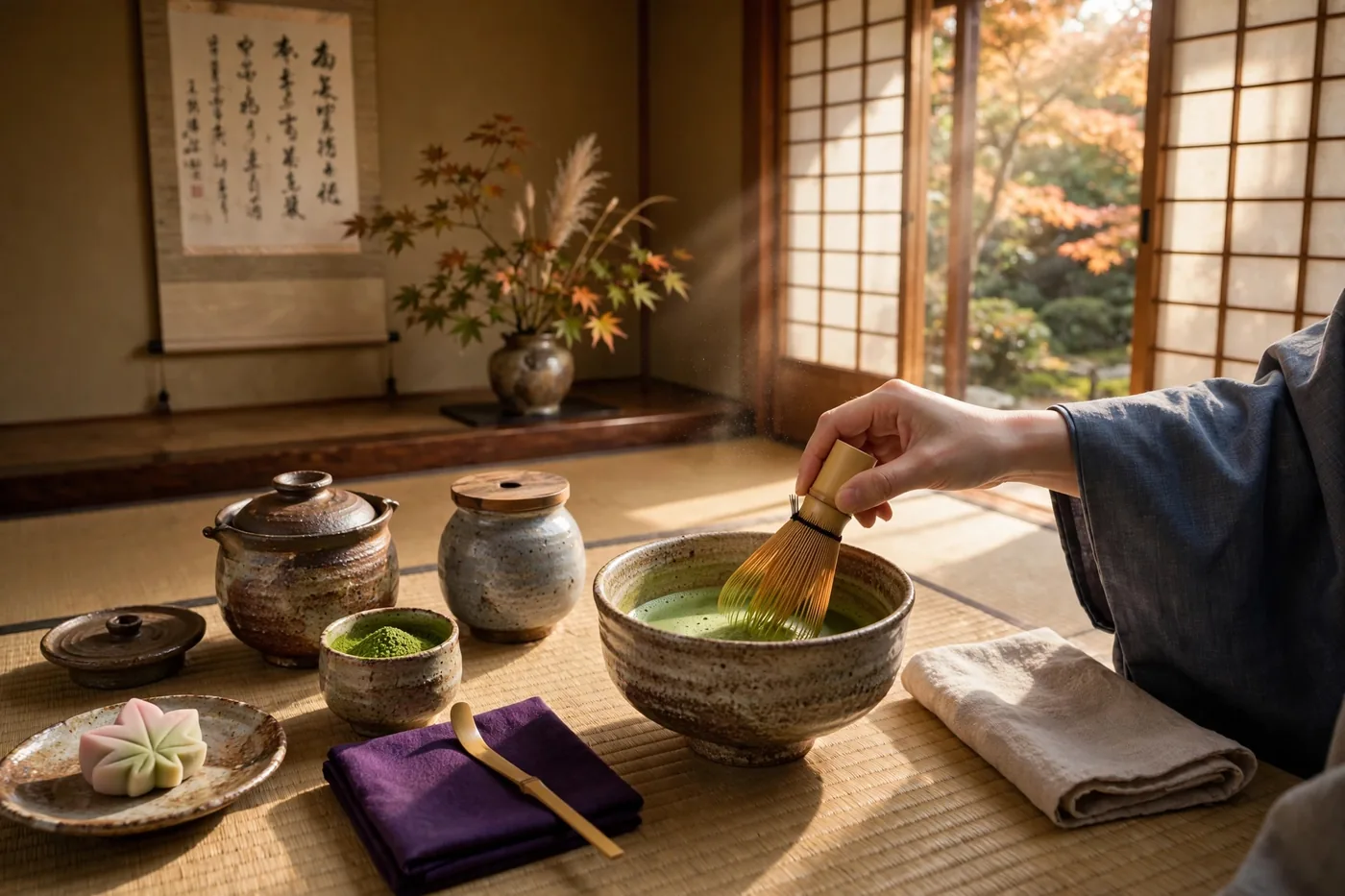
Gongfu, in this context, has nothing to do with martial arts. It translates closer to "skill through practice," the same term applied to any craft refined through repetition. Applied to tea, it means brewing with small vessels, short steeps, and full attention, extracting far more from a single batch of leaves than a mug and a tea bag ever could.
What makes gongfu brewing different
Western tea brewing typically means one long steep, three to five minutes, in a large pot or mug, extracting everything the leaves have to offer in a single pass and then discarding them. Gongfu brewing inverts this: a small amount of leaf (often filling a third of the vessel), a tiny pot or gaiwan, and very short steeps, sometimes just seconds, repeated multiple times. Each infusion tastes slightly different as the leaf slowly unfurls and releases its layers, turning one batch of tea into six or more distinct, connected tastings rather than one uniform cup.
What you actually need
- A gaiwan or small clay teapot (100 to 150ml). A gaiwan, a lidded bowl, is the more forgiving starting point since it works for nearly every tea type and is easy to clean between sessions.
- A pitcher (cha hai). Used to pour the brewed tea out evenly into cups, keeping the vessel itself free for the next steep and ensuring everyone's cup tastes the same.
- Small cups (30 to 50ml). Small enough to drink in two or three sips while the tea is still at the right temperature.
- Loose leaf tea, roughly 5 to 8 grams per session. Oolong and pu-erh are the most traditional starting points, though the method works for green, white, and black tea too, with adjusted steep times.
The basic method
- Warm the vessel with hot water, then discard it. This brings the clay or porcelain to temperature so the first real steep isn't wasted on warming the pot.
- Add the leaves, filling roughly a third of the vessel.
- Rinse the leaves with a quick 5-second pour of hot water, discarded immediately. This opens the leaves and rinses off any surface dust, a step Western brewing skips entirely.
- First steep: 10 to 15 seconds. Pour hot water over the leaves, steep briefly, then pour fully into the pitcher and out into cups.
- Each following steep, add 5 to 10 seconds. The leaves need slightly longer each round as they give up less on each pass. A good oolong can typically go 6 to 8 steeps before it's spent.
Why the ritual itself matters, not just the tea
There's no dramatic physiological claim to make here, gongfu tea isn't more "medicinal" than a mug of the same leaves brewed simply. What changes is the pace. The repeated, small, attention-demanding steps, warming, pouring, waiting, tasting, function similarly to other structured slow rituals covered elsewhere in this journal: a built-in pause that interrupts the reflexive rush of a normal day. Where the evidence on slow, ritualized practice and stress reduction is genuinely solid (covered in more depth in the pieces on breathing and Qigong), gongfu tea is one of the more approachable ways to bring that same structured slowness into an ordinary afternoon.
Getting started tonight
A gaiwan and a bag of loose oolong are enough to begin. Set aside fifteen minutes with no other task attached, and brew through four or five steeps, paying attention to how the taste shifts from one to the next. That shift, more than any equipment, is the actual point of the method.
| Gongfu style | Western / mug style | |
|---|---|---|
| Vessel | Gaiwan or clay pot, 100–150 ml | Mug or teapot, 250–500 ml |
| Leaf per session | 5–8 g (fills ~1/3 of vessel) | 2–3 g |
| Rinse | Yes — 5 s, discarded | No |
| First steep | 10–15 s | 3–5 min |
| Each next steep | +5–10 s | Usually none |
| Infusions | 6–8 from a good oolong | 1, sometimes 2 |
| The point | Follow how a tea changes across steeps; slow ritual | Speed and convenience |
Sources referenced
- Research on structured, ritualized daily practice and stress reduction (see this journal's articles on breathing and Qigong).
- General tea-brewing literature on oolong and pu-erh multi-steep extraction.
This essay reflects general wellness traditions and is not medical advice. It should not replace guidance from a qualified healthcare professional, particularly for existing health conditions.
Want the full practice, not just the essay? Get the free 7-Day Eastern Reset guide — seven mornings of rituals, tea, and bowls, straight to your inbox.
Get the Free 7-Day Reset