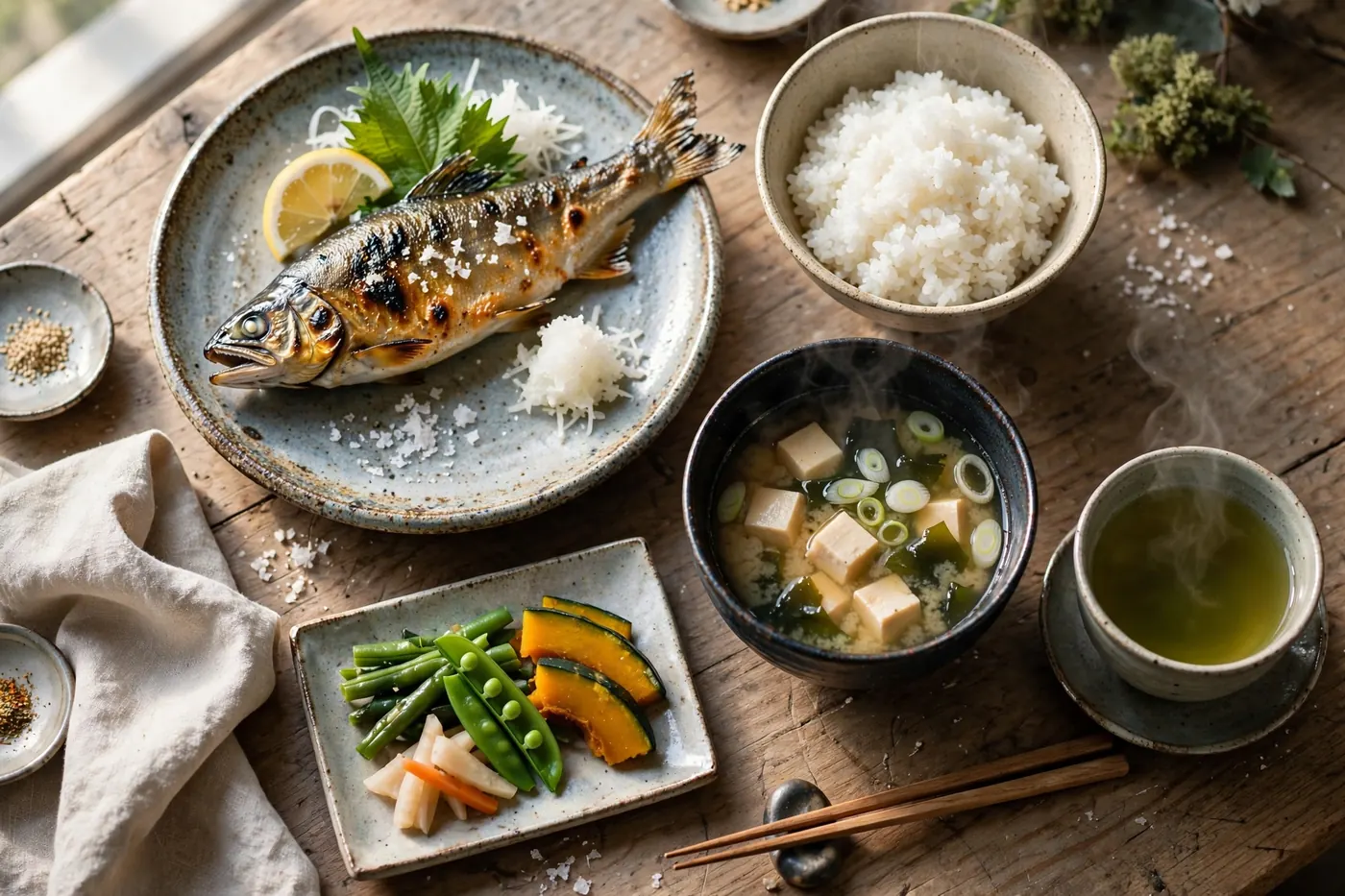
Rice. A small bowl of miso soup. A piece of grilled fish. Two or three pickles. Perhaps a raw egg, a sheet of nori, a scattering of sesame. That is the traditional Japanese breakfast — washoku in its morning form — and on paper it looks unremarkable next to the smoothies, protein bars, and intermittent-fasting coffee that define the modern wellness morning.
It is not unremarkable. It is, on the available evidence and on centuries of lived practice, one of the calmest and most metabolically sound ways to start a day that anyone has designed.
The shape of the meal, not just the ingredients
What makes the Japanese breakfast work is not any single ingredient but the structure: protein, complex carbohydrate, fermented food, and vegetables, all served warm, in modest portions, at a consistent hour. This is a meaningfully different structure from the Western default — coffee and something sweet, or nothing at all — and the difference shows up almost immediately in how the body handles the first few hours of the day.
Steamed rice releases glucose more gradually than the refined flour in most Western breakfast staples, which softens the mid-morning energy dip. Miso soup, made from fermented soybean paste, delivers a small, steady dose of probiotics before the gut has to process anything else. Grilled fish supplies protein and omega-3 fats without the blood-sugar spike of a pastry. And pickles — usually a few slices of daikon or cucumber, lightly fermented — add both fiber and more fermented bacteria to a gut that is, at that hour, unusually receptive to them.
The calm is not incidental
There is a reason this meal reads as "calm" rather than merely "healthy." Warm food in the morning signals something specific to the nervous system: the day is beginning gently, not urgently. Traditional Chinese Medicine — a close cousin to the thinking behind washoku — has long held that cold food and drink first thing in the morning place a mild shock on the digestive system, forcing the body to spend energy warming what it has just consumed instead of directing that energy toward digestion and the gradual, unhurried activation of the rest of the body.
Whether or not you accept the full traditional framing, the practical effect is easy to notice. A smoothie pulled from the fridge, drunk standing at the counter, activates a different physiological and psychological state than a bowl of warm soup eaten sitting down. One says rush. The other says begin.
What the research adds
Modern nutrition science, largely independent of any interest in Japanese tradition, has converged on several of the same conclusions. Meals with a mix of protein, fiber, and complex carbohydrate produce more stable post-meal glucose curves than high-sugar, low-fiber breakfasts — this is well established in glycemic research and explains a large share of the mid-morning crash so many people treat as normal. Fermented foods eaten regularly are associated with more diverse gut microbiota, and microbiota diversity is, in turn, associated with better mood regulation and lower systemic inflammation. And meal regularity — eating at roughly the same time each day — appears to support circadian rhythm in ways that erratic eating patterns disrupt.
None of these findings were designed with washoku in mind. They simply happen to describe, almost ingredient for ingredient, what a traditional Japanese breakfast already does.
Building your own version
You do not need to import an entire cuisine to borrow the logic. The template underneath the Japanese breakfast can be assembled from whatever is already in your kitchen:
A warm base. Rice, oats, or a simple grain porridge — something cooked, not cold. A small protein. An egg, a piece of fish, a spoon of yogurt or tofu. Something fermented. Miso stirred into hot water counts; so does a spoonful of kimchi, sauerkraut, or plain yogurt with live cultures. A vegetable, even a small one. Pickled, steamed, or simply sliced. A quiet ten minutes. Eaten sitting down, without a screen, if the day allows it.
The exact ingredients matter far less than the shape: warm, mixed, modest, unhurried. That shape is what The Japanese Breakfast Book builds out in full — with recipes, timing guidance, and the small rituals that turn a meal into a genuine morning reset rather than another task to get through.
Why the first hour matters more than it seems
The strongest argument for rethinking breakfast is not nutritional at all. It is that the first meal of the day sets a tone the body carries forward. A rushed, cold, sugar-heavy breakfast tells the nervous system the day is already an emergency. A warm, seated, deliberately modest one tells it the opposite — and that signal, repeated daily, is exactly the kind of small, cumulative input that Eastern wellness traditions have always considered more powerful than any single dramatic intervention.
You do not have to eat rice and grilled fish tomorrow morning. You only have to notice what your current breakfast is telling your body, and decide whether that is actually the message you want to send.
| Component | Typical form | What it contributes |
|---|---|---|
| Complex carbohydrate | Steamed rice | Gradual glucose release; softer mid-morning dip than refined flour |
| Fermented food | Miso soup | A small, steady dose of live cultures before the gut processes anything else |
| Protein + healthy fat | Grilled fish | Protein and omega-3s without a blood-sugar spike |
| Vegetable / more ferment | Lightly pickled daikon or cucumber | Fibre plus additional fermented bacteria |
| How it's served | Warm, modest portions, consistent hour | A steadier start than coffee-and-sugar or nothing |