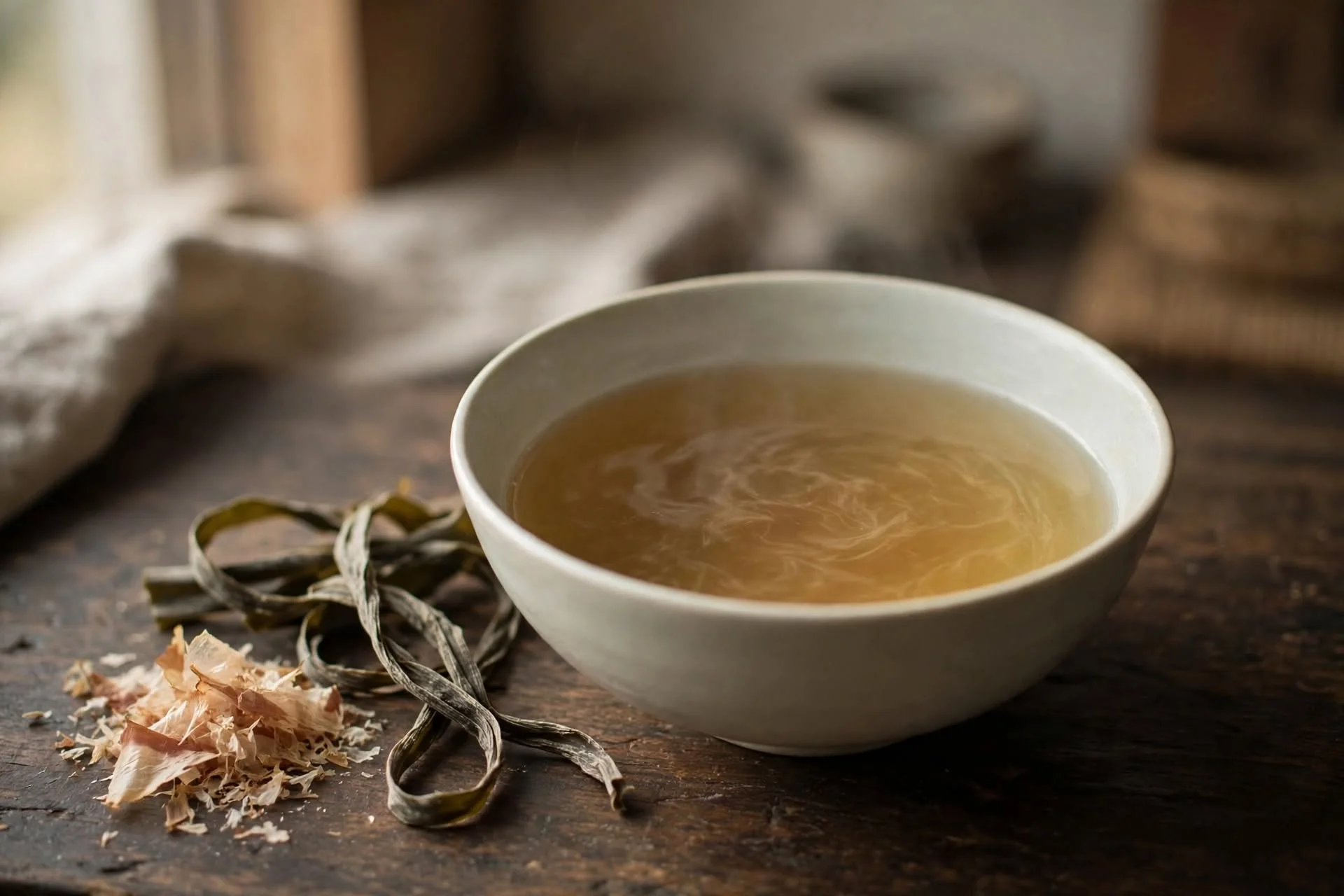
There is a moment in a Japanese kitchen that most recipes skip over entirely. Before the miso goes into the pot, before the noodles hit the broth, before the vegetables are even sliced, someone has already simmered a pale, clear liquid and set it aside. That liquid is dashi, and it is the reason a bowl of Japanese soup tastes like something rather than nothing.
Western recipes tend to build flavor from the outside in: browning, reducing, layering sauces. Japanese cooking often does the opposite. It starts with a broth so clean you could mistake it for water, and lets that broth carry everything else. Once you understand dashi, a surprising number of "mysterious" Japanese flavors stop being mysterious. They are just dashi, quietly doing its job.
What dashi actually is
Dashi is a broth built from one or two ingredients, simmered briefly rather than for hours. This is the first surprise for anyone used to Western stock, which often simmers bones for half a day. Dashi is fast because it isn't trying to extract collagen or richness. It is extracting umami, the savory taste carried by glutamates and, in some versions, inosinate.
The most common traditional base is kombu, a dried kelp harvested mainly from the cold waters around Hokkaido. Kombu alone makes a vegetarian dashi with a gentle, mineral sweetness. Add dried bonito flakes (katsuobushi), shavings of smoked and fermented skipjack tuna, and you get the more familiar, slightly smoky dashi used in miso soup and noodle broths across Japan.
A third version, niboshi dashi, uses small dried sardines and has a stronger, more assertive flavor. It shows up in heartier regional dishes and rustic home cooking rather than delicate restaurant broths.
None of these are secret techniques. They are pantry staples, treated the way an Italian kitchen treats good olive oil: unremarkable to buy, essential to the result.
Kombu dashi (vegetarian)
What you need:
10 grams dried kombu (roughly a 10cm strip)
1 liter cold water
Method:
- Wipe the kombu gently with a damp cloth. Do not rinse it under running water or scrub it. The white, slightly powdery residue on the surface is concentrated flavor, not dirt.
- Place the kombu in the water and let it sit for at least 30 minutes, or overnight in the refrigerator if you can plan ahead.
- Heat gently until small bubbles just begin to form at the edges of the pot. This is well below a boil.
- Remove the kombu immediately. Boiling it, or leaving it in too long, releases bitterness and a slippery texture nobody wants in their soup.
That's the whole method. Ten minutes of attention, most of it passive.
Awase dashi (kombu and bonito, the everyday version)
What you need:
The kombu dashi from above, kombu already removed
15 to 20 grams bonito flakes
Method:
- Bring the kombu dashi back to a gentle simmer.
- Turn off the heat and scatter in the bonito flakes.
- Let them sink and steep for about two minutes. Do not stir.
- Strain through a fine sieve or cheesecloth. Do not press the flakes to extract more liquid. This is the step most home cooks get impatient with, and pressing introduces a bitter, fishy edge that a gentle strain avoids entirely.
The result should smell faintly of the sea and taste rounder than plain salted water, without tasting distinctly "fishy." If it tastes fishy, the bonito likely steeped too long or was pressed too hard.
What to do with it
Dashi is a base, not a finished dish, which is exactly why it is so useful. The same batch can become:
- Miso soup, whisked with miso paste off the heat, since boiling miso dulls its flavor and can destroy some of its beneficial fermentation compounds.
- A simple noodle broth, seasoned with a little soy sauce and mirin, for udon or soba.
- Simmered vegetables, using dashi instead of water so that even a plain dish of simmered daikon or spinach carries background depth.
- Tamagoyaki, the rolled Japanese omelet, which uses a small amount of dashi mixed into the eggs for savoriness rather than saltiness alone.
Storage and practical notes
Fresh dashi keeps for two to three days refrigerated in a sealed container, and freezes well in small portions, which is worth doing if you cook Japanese food more than occasionally. There is also an instant version, dashi powder or granules, sold in most Asian grocery stores. It is not a traditional preparation, but it is a legitimate weeknight shortcut, and even experienced home cooks in Japan keep a jar of it for busy evenings. If you use it, check the label: many brands include added salt and sometimes MSG, so you may need to adjust seasoning elsewhere in the dish.
A note on what dashi is not
Traditional Japanese cooking treats dashi as a foundation of flavor, not a health tonic, and it would be inaccurate to present it otherwise. It has no documented medicinal properties beyond the ordinary nutritional content of kelp and dried fish. Its value is culinary: it lets Japanese home cooking achieve real depth of flavor with very little salt, fat, or added sugar, which is part of why traditional Japanese meals can taste satisfying while staying comparatively light.
Frequently asked questions
Can I make dashi without any fish products?
Yes. Kombu dashi alone is fully vegetarian and vegan, and is traditionally used in Buddhist temple cooking (shojin ryori), sometimes combined with dried shiitake mushrooms for extra depth instead of bonito.
Is dashi the same as fish stock?
No. Fish stock is typically simmered longer, often with bones, and aims for richness and body. Dashi is brief and light, aiming for clarity and umami rather than richness.
Why did my dashi turn out bitter?
Almost always one of two things: the kombu boiled instead of just reaching a gentle simmer, or the bonito flakes were left in too long or pressed while straining.
Can I reuse the kombu and bonito after making dashi?
Many Japanese households do. The spent kombu and bonito, called dashigara, still has flavor and fiber left and is often simmered again with soy sauce and sugar to make a simple side dish called kombu tsukudani, rather than thrown away.
What is dashi, in one sentence?
A light Japanese stock made by briefly steeping kombu (dried kelp) and usually katsuobushi (dried bonito flakes) in hot water — the umami base that most Japanese soups, simmered dishes and noodle broths are built on.
What does dashi taste like?
Clean, savoury and faintly of the sea, but not fishy when it is made properly. The taste is umami, carried by glutamate from the kombu and inosinate from the bonito, which amplify each other. A good dashi tastes rounder than salted water without any single flavour standing out.
What is the difference between dashi and dashi powder (hondashi)?
Hondashi is instant granulated dashi that dissolves in seconds. It is a legitimate weeknight shortcut used even in Japanese home kitchens, but it usually contains added salt and often MSG and sugar, so it tastes saltier and less nuanced than dashi made from kombu and bonito. “Umami powder” is different again — typically pure MSG with none of the kombu-and-bonito character — and Western stock cubes are a separate thing built from herbs, salt and yeast extract.
Does dashi have any health benefits?
Dashi is a cooking ingredient, not a health tonic, and has no documented medicinal effect beyond the ordinary nutrition of kelp and dried fish. Its practical value is that it lets food taste satisfying with very little added salt, fat or sugar. One caution: kombu is very high in iodine, so anyone managing a thyroid condition should not use kombu dashi in large daily amounts.
The quiet foundation
Dashi rewards the kind of attention worth paying to small, precise, repeatable actions that quietly upgrade everything built on top of them. You do not need a trip to Japan or a specialty kitchen to make it. You need a strip of dried kelp, ten spare minutes, and the willingness to trust that something this simple can carry an entire bowl of soup.
If dashi is the first thread you've pulled on, The Quiet Japanese Kitchen walks through the rest of the pantry it belongs to: soy sauce varieties, rice vinegar, mirin, and the small stock of ingredients that make Japanese home cooking approachable rather than intimidating.
Related reading: Congee: The Quietest Breakfast in the World, Why the Japanese Breakfast Is the Calmest Meal of the Day, Miso: White, Red and Hatcho — and Why You Never Boil It, and Three Okinawan Longevity Staples You Can Buy in Any Supermarket, and a practical weekly meal-prep routine, and the quiet philosophy behind cooking this way.
| Dashi | Ingredients | Flavour | Typical use | Vegetarian |
|---|---|---|---|---|
| Kombu | Dried kelp only | Gentle, mineral, faintly sweet | Delicate soups; vegetarian cooking | Yes |
| Awase | Kombu + katsuobushi (bonito flakes) | Rounded, lightly smoky umami | Miso soup, noodle broths, everyday cooking | No |
| Niboshi | Small dried sardines | Strong, assertive | Hearty regional dishes, rustic home cooking | No |
| Shiitake | Dried shiitake mushrooms (often with kombu) | Deep, earthy | Simmered dishes; vegetarian | Yes |